By Alexander Almgren
Average LUFS by Genre: What 314,876 Measured Tracks Actually Show
We measured 314,876 tracks. The overall median master sits at −9.5 LUFS integrated, and 90.4% of everything we measured is louder than −14, the target the internet keeps recommending. Genre by genre across 20 lanes, the medians run from −8.4 (metal) to −14.1 (ambient): only ambient actually lives at the folklore number. Not opinions, not forum folklore: measured audio, analyzed through the same pipeline that powers our Sonic Analyzer, from a 314,000-track database.
I've mixed and mastered records for 20 years, 19 Billboard Top 20 albums, and the loudness question generates more bad advice than any other topic in audio. So instead of adding another opinion, here are the numbers.
The Data: Median Integrated Loudness by Genre
| Genre | Tracks | Median LUFS | Middle 50% range |
|---|---|---|---|
| Metal | 6,666 | −8.4 | −9.7 to −7.3 |
| Punk / Emo | 8,338 | −8.5 | −10.2 to −7.4 |
| Dance / EDM | 18,514 | −8.7 | −10.4 to −7.4 |
| House | 12,508 | −9.1 | −10.4 to −8.0 |
| Alternative | 8,439 | −9.2 | −10.9 to −8.0 |
| Rock | 13,966 | −9.2 | −11.0 to −7.8 |
| Electronic | 9,892 | −9.3 | −11.0 to −8.0 |
| Latin | 15,065 | −9.4 | −11.0 to −8.2 |
| Pop | 46,316 | −9.5 | −11.2 to −8.1 |
| Afrobeats | 2,310 | −9.5 | −10.8 to −8.4 |
| Indie | 10,905 | −9.6 | −11.3 to −8.3 |
| R&B / Soul | 11,412 | −9.6 | −11.2 to −8.3 |
| Country / Folk | 10,779 | −9.6 | −11.4 to −8.2 |
| Hip-Hop / Rap | 48,263 | −9.7 | −11.2 to −8.5 |
| Christian / Gospel | 1,896 | −9.9 | −12.2 to −8.5 |
| Reggae / Dancehall | 1,297 | −10.1 | −11.6 to −8.7 |
| Singer/Songwriter | 3,163 | −10.6 | −12.4 to −9.2 |
| Jazz | 2,933 | −12.8 | −15.2 to −10.8 |
| Instrumental / Score | 8,816 | −12.9 | −16.5 to −10.1 |
| Ambient | 5,100 | −14.1 | −17.4 to −11.4 |
Coverage: the 20 genres above account for 246,705 tracks, classified by the analyzer's own genre engine. Another 45,847 sit in tags too niche or mixed to name honestly (grouped as "other" and excluded from the table), and 22,320 carry no genre at all, every one of them still feeds the overall numbers (median −9.5, 90.4% louder than −14), which come from the complete 314,876-track set.
Method, briefly: loudness measured from actual audio, projected to whole-track integrated LUFS (the BS.1770 measure Spotify, Apple Music, and YouTube all reference) using a correction model backtested to ~0.5 dB mean error, the same estimate the Sonic Analyzer displays on every scan. The full 314,876-track set gives the overall numbers (median −9.5, middle half −11.4 to −8.2, 90.4% louder than −14); the genre table covers 246,705 tracks across 20 named genres (93% of the set carries a classification from the analyzer's genre engine). Ns are in the table; this isn't a 40-song listicle sample.
One calibration honesty note: cross-checking against live full-capture scans of the same songs (and against independent meters), the archived measurements used here read roughly a decibel conservative, meaning if these numbers err, real-world masters are slightly louder than the table shows, not quieter. Every claim in this study survives that correction in the same direction it was made.
The Three Findings That Matter
1. The −14 LUFS advice is folklore, and the market ignores it, in nearly every genre. Of 20 genre lanes, only ambient medians at −14; the next-quietest (instrumental/score and jazz) sit above −13, and every song-forward genre sits between −8.4 and −10.6. The middle half of rock lives between −10.6 and −7.7. If you master to −14 because a tutorial told you Spotify "wants" it, your track sits 4–6 dB below its genre's center: quietest thing in the playlist the moment normalization is off (it's user-toggleable), and reading as timid next to competitors even when it's on. I've written about what Spotify's loudness handling actually does and why songs end up quiet on Spotify, this table is the missing evidence layer.
2. Loudness and dynamics are the same ranking, inverted. The genre order for loudness is almost exactly the reverse order for retained dynamic range: metal masters hottest and squashes hardest; jazz masters quietest and breathes most; R&B and folk keep more movement than rock at a similar era of production. Neither end is wrong, they're different contracts with the listener. What is wrong is mastering a soul record with a metal contract. The R&B lane now has its own numbers on that: the records that broke out sat warmer in the low-mids, with a slightly more controlled master underneath, which is the same contract read from the other side.
3. Even the "quiet" genres aren't quiet anymore. Country/folk, R&B, and indie, the lanes engineers describe as dynamic, median between −9.6 and −10.6. The only music still mastered around −14 is music without a lead vocal fighting for a playlist: ambient, scores, and jazz. The loudness era didn't end; it just got better limiters.
The Decade View: The Loudness War Had a Ceasefire, Then It Quietly Restarted
We also have release dates, so here is the question nobody has answered with real data: what did ten years of streaming normalization actually do to mastering loudness, genre by genre?
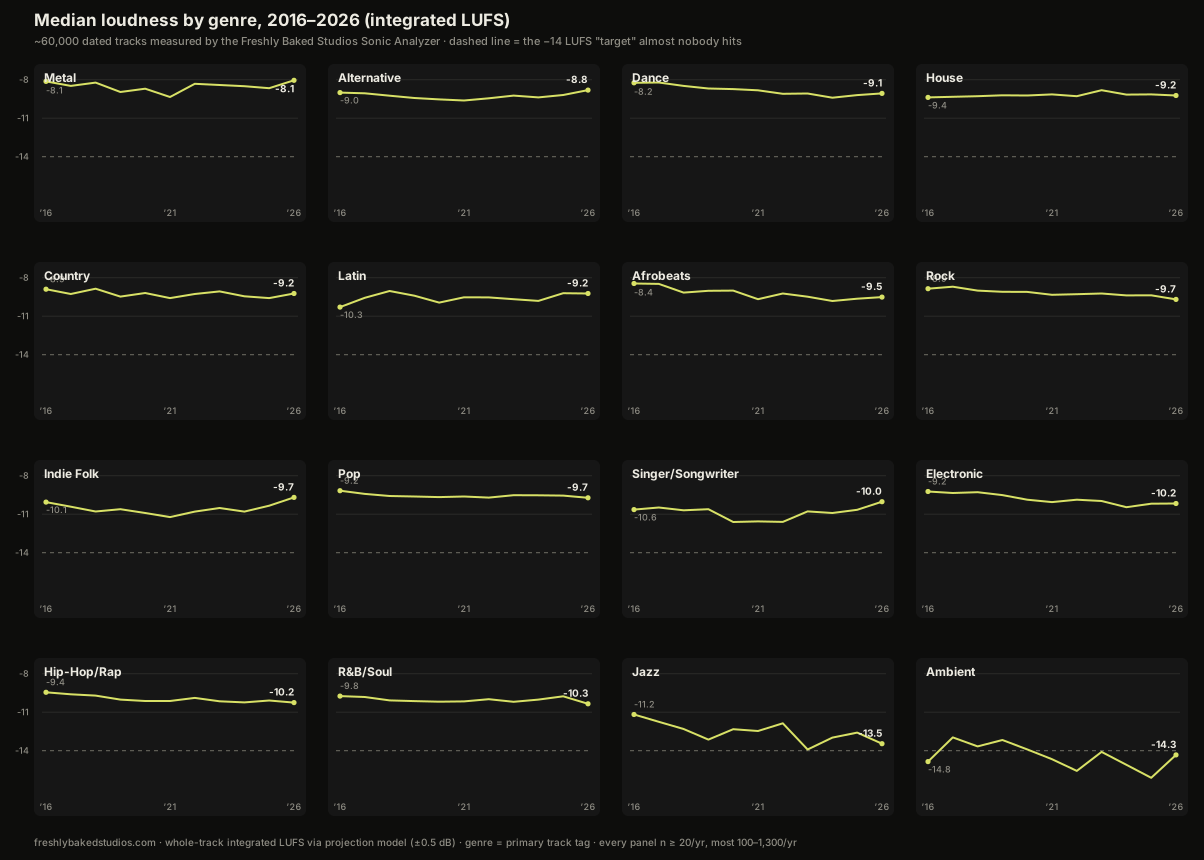
The story is a two-act play. Act one (2016–2021): the ceasefire. As normalization took hold, nearly every genre drifted half a decibel to a full decibel quieter, you can see the gentle downward slope in pop, hip-hop, alternative, rock, R&B. Act two (2022–2026): the relapse. The drift stops, and in half the genres it reverses. Alternative's 2026 median (−8.8) is louder than its 2016 median. Indie folk clawed back from −11.2 to −9.7. Singer/songwriter, the quietest of the song-forward lanes, has re-loudened a full decibel and a half since 2021.
The standout panels:
- Metal never signed the ceasefire. Its loudest year in the entire dataset is 2026 (−8.05). Ten years of normalization changed nothing.
- House is the flattest line in music, −9.2 ± 0.2 for a decade. The genre found its level and holds it like a metronome.
- Dance is the one genre that genuinely de-escalated and stayed there: −8.2 in 2016 to −9.1 now, a real, sustained full-decibel retreat.
- Electronic and hip-hop quieted and plateaued, about a decibel of détente, held since 2020.
- Ambient is in loudness freefall (−14.9 → −16.1 at the 2025 low): the one lane where the streaming era pays for quiet, and mastering followed the money.
- Jazz and ambient are the only genres that ever touch −14. For everyone else, the famous target has been irrelevant for the entire decade it's been recommended.
If you master records, the practical reading is the same as the snapshot table: your genre has a center, the center moved less than the internet thinks, and since 2022 it's been inching louder again in most lanes.
Two More Findings (added August 30)
The major-label loudness advantage is gone. Split the same dataset by label field: artists with a major label on file median −9.1 LUFS; artists with no label at all median −9.5. A third of a decibel. Ten years ago "major-label loud" was a real moat, an indie master next to a big-budget master simply sat lower in the playlist. That moat is now a third of a decibel wide. Loudness is a solved problem at every budget level; what separates records now is what the loudness is carrying.
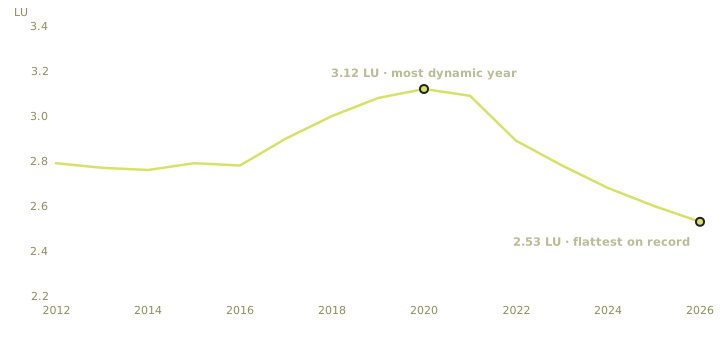
2026 masters are the flattest on record. The dynamics-by-year curve tells a sharper version of the relapse story: short-window loudness range climbed from 2.8 LU (2012 releases) to 3.1 LU (2020), dynamics genuinely improved through the ceasefire, then fell every single year since, landing at 2.5 LU for 2026 releases, the lowest value in the dataset. Music is getting louder and flatter at the same time. The war didn't just restart; it's being fought with less dynamic range than 2012.
What To Do With This
Don't chase the loudest quartile, chase your lane's middle. A master that lands inside your genre's middle-50% band competes on level without buying distortion, and in our analyzer data the records that convert listeners into fans cluster in-band rather than at the extremes. If you want to know where your track actually sits against these numbers, your LUFS, your dynamics, against your genre's converting cohort specifically, run it through the Sonic Analyzer; the scan is free and takes about a minute (here's a full 19-minute walkthrough of what a scan shows you). And if the numbers come back saying the master needs real work, here's what that costs, honestly itemized, or get a number calibrated to where you actually are as an artist from the rate calculator.

Multi-platinum producer & engineer — 19 Billboard Top 20 albums, 3.3B+ streams. Every project at Freshly Baked Studios is mixed and mastered by him personally.
Meet Alexander →Ready to Make Something Better?
Get a custom quote in 90 seconds — or book a free 30-min consultation.
19 Billboard Top 20 albums · 3.3B+ streams · Apple Digital Masters certified